

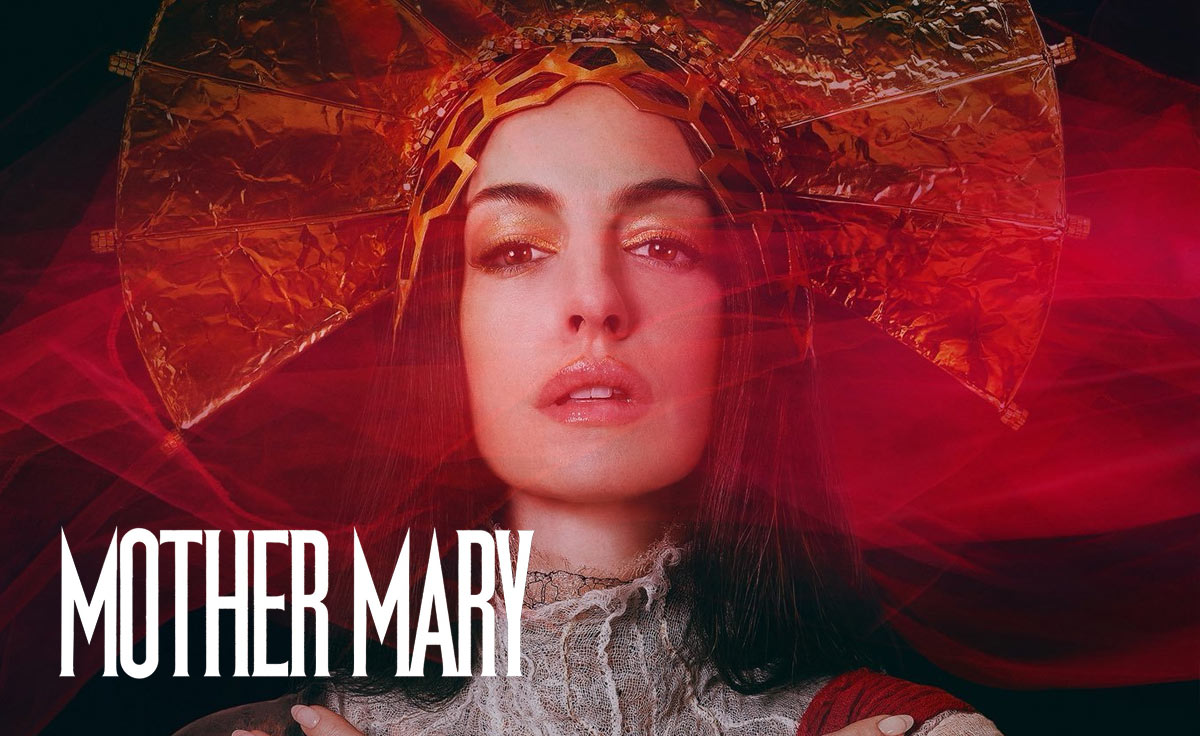
David Lowery flirts with the edge of the surreal. He seems drawn to spaces where meaning dissolves into feeling. With The Green Knight, that instinct resulted in something hypnotic, maybe even transcendent. His new film for A24, Mother Mary, carries a similar energy but wavers between intimate character study and pure abstraction.
At its core, Mother Mary is simple. The title character is a global pop icon, played by Anne Hathaway, who is in the midst of both physical and mental crises. She is worn thin and estranged from her creative identity. More importantly, she is estranged from the woman who helped build her image. That woman is Sam, played by Michaela Coel, a fashion designer whose work shaped the very persona of “Mother Mary.”
Their tumultuous relationship begins to escalate and unravel simultaneously when Mary arrives at Sam’s countryside estate after a decade-long rift. Mary asks Sam to design a comeback look, but their wounds are still fresh, and nothing about their reunion feels professional or clean. The film becomes almost theatrical in its staging as the pair sift through old grievances, unspoken resentments and the fragile possibility of collaboration.
Lowery frames their relationship like a ghost story. There are no traditional ghosts or demons, but both women are haunted by what they were and what they have become. Coel and Hathaway fully commit to their roles. Their chemistry, pacing and emotional depth are striking. In a cinematic landscape often dominated by performers shaping roles around themselves, Hathaway and Coel transform to meet the demands of this enigmatic narrative.
Hathaway leans into the role’s duality. Her performance shifts between pop spectacle and raw vulnerability. She is magnetic, evoking the grandeur of pop stardom, but it is in quieter moments where she is most compelling. She plays Mary as someone possessed … not by a spirit, but by absence. There is a void where connection once lived.
Coel serves as the film’s grounding force. Sam is measured and cautious, emotionally scarred but resilient. She understands the value of her craft in a way Mary no longer does, and Coel brings a steady emotional intelligence that keeps the film from drifting too far into abstraction. Together, they create a dynamic that feels lived-in and volatile, like a relationship that never truly ended.
The film layers metaphor upon metaphor, sometimes to its detriment. Lowery’s spectral subplot pushes the story further into surreal territory. Some viewers will find the approach alienating, even pretentious. Still, the film remains fascinating. In one standout sequence, Mary performs choreography without music, revealing art as a language between collaborators that transcends ego and time. It is a moment of clarity, where pretense falls away.
While the performances and imagery are steeped in metaphor and intensity, Mother Mary distinguishes itself through sound. A film centered on a pop star is expected to feature strong musical elements, but what emerges feels more genuine than expected. Scenes between Hathaway and Coel are underscored by original music and an atmospheric score that enhances the emotional weight. The film may not be about music, but its sound design shapes the experience.
This is not a film that aims to be easily understood or neatly resolved. It is messy, indulgent and, at times, pretentious. But it is also ambitious, anchored by two exceptional performances that elevate the material.
Mother Mary is not about fame or ghosts. It is about the fragile, often painful act of creating with someone else, and what remains when that connection fractures. For me, the film is an 8/10.