

I’ll admit, the Fantastic Four film franchise and I haven’t exactly been on the best of terms. Even knowing how important these characters are to the Marvel multiverse, I’ve only seen the 2005 Fantastic Four and its 2007 sequel, Rise of the Silver Surfer. I’ll also admit: I’ve been a bit too harsh on those films. They had solid casting, decent effects for the time, and some genuinely entertaining moments. But the core issue with those entries is that they never felt like they understood how essential the Fantastic Four are to the larger tapestry that makes Marvel beloved to its fans. (No, I haven’t forgotten the 2015 version. I just haven’t had the heart to bear the disappointment seeing that one yet.) But with Disney’s acquisition of Twentieth Century Fox in 2019, Marvel’s first family was finally free to return to the MCU. And sure, it took until 2025 and several phases of universe-spanning chaos to get them here, but I’d rather wait and have them done right.
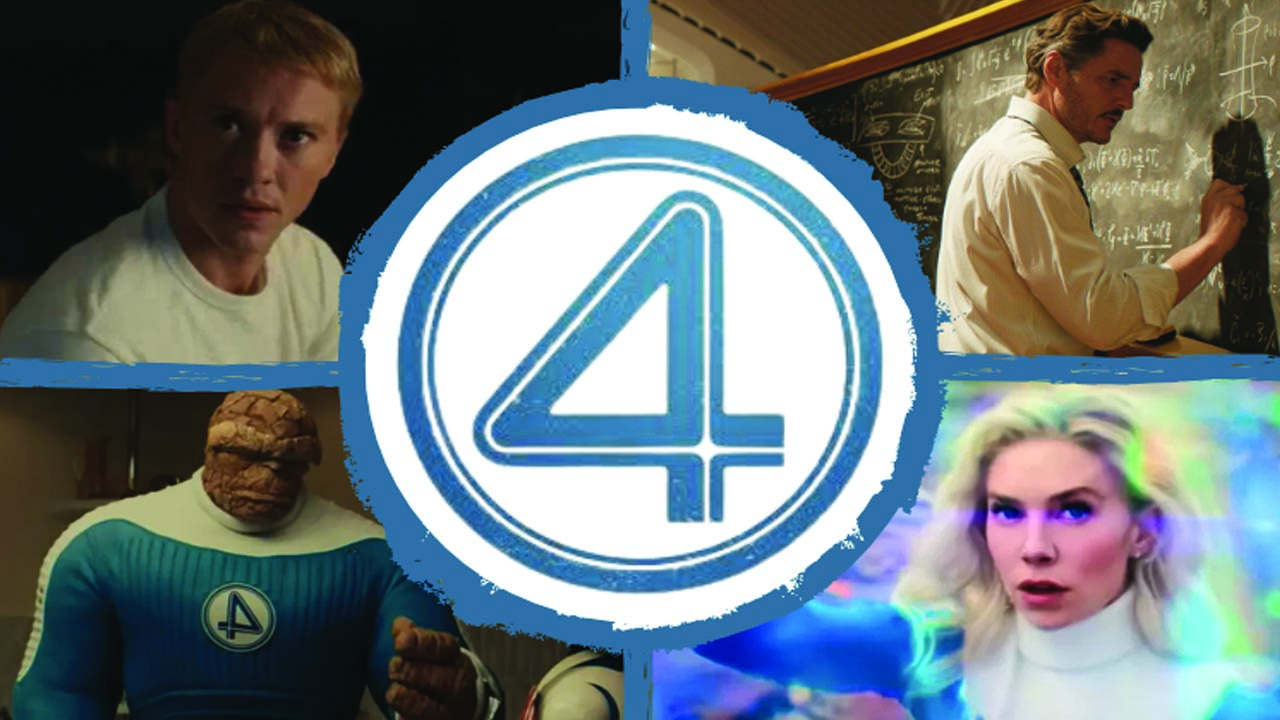
The Fantastic Four: First Steps takes place in yet another alternate timeline, Earth-828—during a technologically advanced version of the 1960s. By the time the story begins, Reed Richards (Pedro Pascal), Susan Storm (Vanessa Kirby), Ben Grimm (Ebon Moss-Bachrach), and Johnny Storm (Joseph Quinn) are already established and beloved as space explorers turned superheroes. But when Sue discovers she’s finally pregnant after years of trying, she and Reed become obsessed with “babyproofing the world” to protect their child.
Enter the Silver Surfer (Julia Garner), herald of Galactus, a cosmic, planet-consuming entity who has set Earth in his sights. What follows isn’t just a fight to save the world, but a global effort: the Fantastic Four must work with every nation on Earth to stop the apocalypse, using brains, heart, and more than a few clever science-fiction solutions.
Right off the bat: this film was absolutely worth the wait. It’s the best Fantastic Four adaptation to date, hands down. The element that pulled me in the most? The setting. Not just the 1960s (a clever nod to the team’s 1961 comic debut), but an alternate version of the decade, one where the technology is far more advanced, but the aesthetic remains gloriously intact.
That’s right: retro-futurism. One of my favorite underused settings. Think Tomorrowland, if Tomorrowland actually followed through on its promise. That wonder bleeds into every part of the film—costume design, cityscapes, even the UI of their machines. (Shoutout to H.E.R.B.I.E., their charming little robot assistant.) This is a Marvel film that dares to look different, and better yet, it commits to it.
The cast deserves their flowers too. While I had a soft spot for the 2005 cast, they felt like attractive actors playing scientists, not actual scientists. But this time? The team feels like a family. The banter is natural, the tension is earned, and crucially, these characters are thinkers first and superheroes second. Pascal gives Reed a tired-but-determined gravitas, but it’s Kirby’s Sue Storm who anchors the team emotionally and tactically. She’s not “the hot girl”, she’s the heart, the diplomat, and the quiet genius steering the narrative. And when push comes to shove? She’s one hell of a scary mother bear.
Joseph Quinn brings Johnny Storm’s usual swagger, but with a touch more sincerity and emotional depth than we’ve seen before. And Moss-Bachrach as Ben Grimm had a tall order, given how iconic Michael Chiklis was in the role. But this version of Ben has something new: quiet wisdom, a healthier self-acceptance, and a soulfulness that makes his rocky exterior feel earned.
One of the most refreshing choices here, and something MCU fatigue has made me deeply appreciate, is the film’s unironic sincerity. There are tense action beats, yes (Galactus is still a cosmic force of dread), but the climax isn’t just solved with fists or sky beams. Instead, the solution lies in empathy, diplomacy, and genuine collaboration. It’s a hopeful tone that feels retro in the best way, almost charmingly old school. It reminds me of recent shifts in superhero media, like Superman: Legacy, which also leaned into sincerity over snark. And it works. It makes you feel something beyond explosions.
Fantastic Four: First Steps is clever in title and intent. Not only is it a nod to baby Franklin’s existence, it’s also a mission statement: this is the first step. A new start, not just for Marvel’s original super-team, but for the MCU as a whole. If Deadpool & Wolverine wiped the slate clean, Fantastic Four plants something new in the soil. Something smart, heartfelt, and for once, sincerely optimistic. It doesn’t just restore faith in Marvel’s first family. It reminds us why they mattered in the first place.