

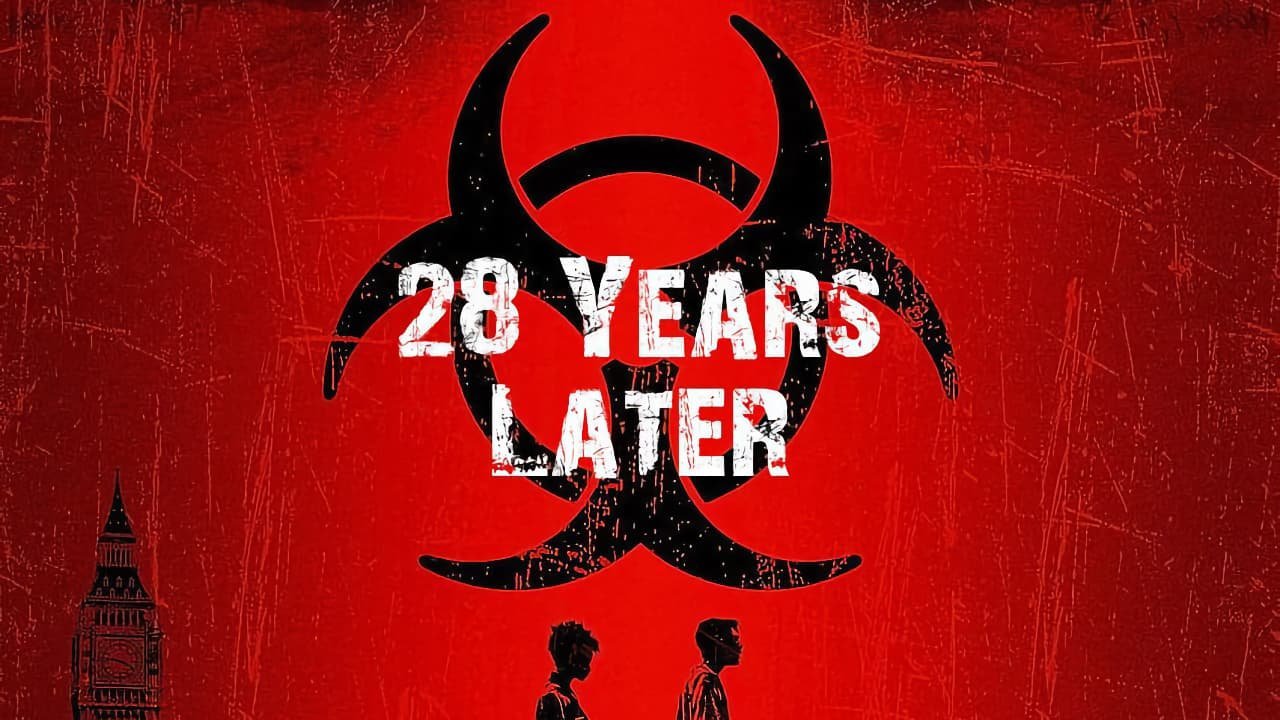
Director Danny Boyle and writer Alex Garland return to the universe they created more than two decades ago when fans were first delightfully horrified by 28 Days Later. If moviegoers expect a similar experience this time around, they need to adjust their expectations. Boyle and Garland are not just covering old ground, but instead are treading on stranger, more emotional, and more haunting ground. Back in 2002, 28 Days Later breathed new life into the zombie genre.
That’s not hyperbole. I found myself sifting through the hundreds of titles of zombie films released in the five to 10 years prior. Aside from being puzzled that Weekend at Bernie’s is considered a zombie film, and revisiting Peter Jackson’s Dead Alive (New Zealand’s first zombie movie), there wasn’t anything truly interesting, other than Resident Evil. In all honesty, that slice of the horror genre wasn’t very lively … (sorry, not sorry).
28 Days Later shifted zombie movies. Watching for zombies became tense and exciting. In 28 Years Later, there are still terrifying, rage-infected killers hurtling at full speed, but this film isn’t really about them. Instead, it’s a coming-of-age story buried in a horror shell, a film more preoccupied with generational scars and emotional reckonings than with blood-soaked spectacle.
The story opens during the original outbreak as a young boy named Jimmy, played by Rocco Haynes, watches his family tear itself apart. His father, a priest, views the apocalypse as divine justice, forming a cult of infected. It’s a chilling start, and while it echoes the visceral trauma of the first film, it sets the tone for something more psychological.
We flash forward 28 years: The rest of the world has moved on, but Britain remains quarantined and left to rot. On a small island off the coast, 12-year-old Spike, played by Alfie Williams, joins his father, Jamie, played by Aaron Taylor-Johnson, on a rite of passage on the mainland. While he heads out on his coming-of-age quest, his seriously ill mother Isla, played by Jodie Comer, lies in bed. It’s evident she is mentally and physically deteriorating.
What ensues sets up the emotional core of this film, which is the first of three movies. Williams anchors the film in a performance that’s both vulnerable and bold. Spike isn’t a superhero-in-training; he’s a boy figuring out who he is and finding out who his parents are. He’s coming to grips with how messy being a human is, even if there aren’t zombies trying to eat you. His experience is grounded, believable, and heartbreaking. Of course, this is all balanced by Boyle’s direction, which is chaotic in the best way. He blends stock footage, dreamlike freeze frames, rapid jump cuts, and lyrical editing in a way that makes the film feel more arthouse than a blockbuster. The stylized nature of it borders on being self-indulgent but also results in powerful, gut-punching moments. This is very evident in the third act, where Ralph Fiennes’ portrayal of Dr. Kelson steals the show. He is oddly serene in a world gone absolutely mad and masterfully delivers the film’s most moving scenes.
That said, not everything lands. The motivations for the journey to the mainland are murky. I was really scratching my head over it.
What was the point? They weren’t hunting food. They were there so Spike could kill zombies.
In a world where they are basically thrust back into the Dark Ages, starvation is a real threat and resources are scarce, why take the risk? I think they could have come up with a much better reason to venture out. Also, the tonal shifts in the film toward the end feel disjointed. One moment everyone is meditating on mortality, the next they’re knee-deep in exploding viscera. It’s jarring, and arguably fitting for a story about chaos, but felt odd. The ending of the film was the most jarring of all.
I won’t spoil it, but things got weird. Weird like A Clockwork Orange kind of weird. Some audiences may be expecting a straightforward horror-action flick. They’ll instead find a layered, unpredictable, and emotionally rich narrative. Boyle and Garland have crafted a film that honors the source material and dares to evolve. It’s grisly, gorgeous, and deeply human. It’s a film less about the infected outside and more about what’s left of the humans when the world ends.
Solid 8 out of 10.