

 I’ve said it before and I’ll say it again – Isekai is my favorite narrative device. Inspired by stories such as The Wizard of Oz, Alice in Wonderland, and The Chronicles of Narnia, kid me would spend hours trying to find a portal into a magical world where I could make friends with magical creatures and actually be a hero for once. I’ll admit to you all now, that daydream went on far longer than it should have – something that therapy and discovering tabletop RPGs has moderately helped. Look, sometimes it seems like being transported into another reality might be the only way we can heal whatever part of ourselves we don’t like.
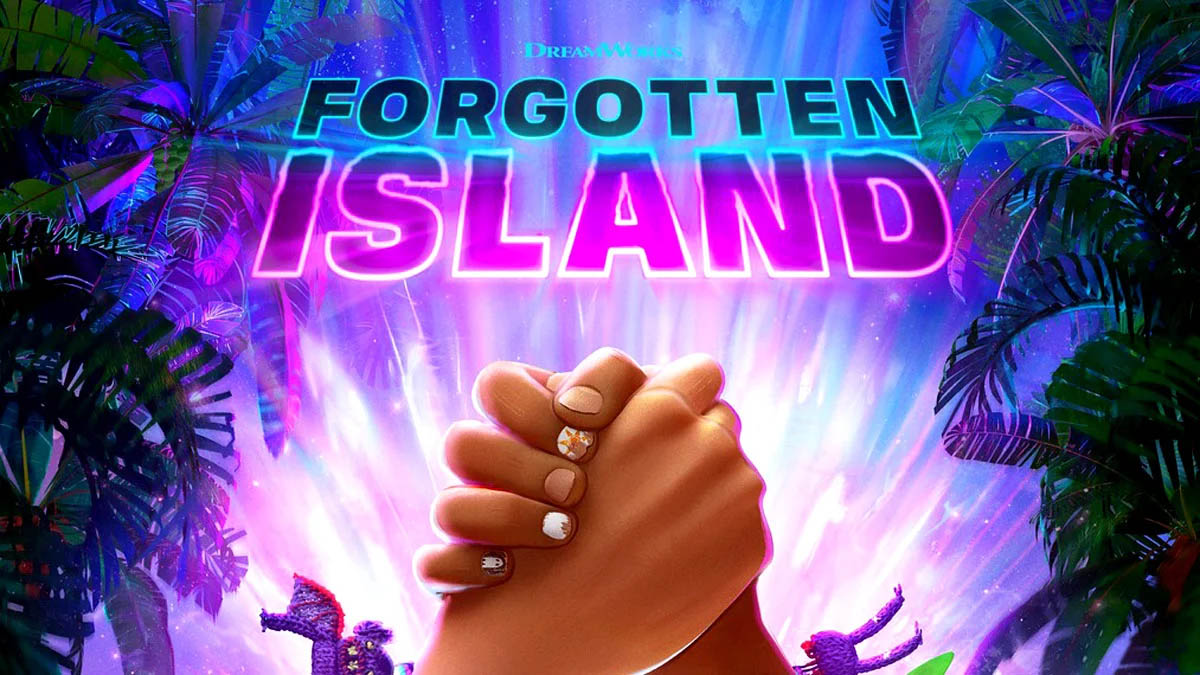
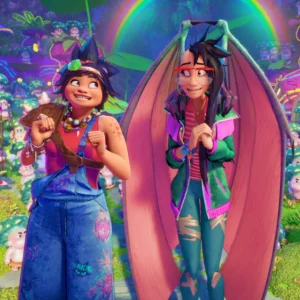
That’s why I immediately was drawn to the premise of Forgotten Island, DreamWorks latest animated feature. Set in1990’s Philippines, imaginative wild-child Jo (H.E.R) forms a close friendship with the more grounded yet brilliant Raissa (Liza Soberano), initially bonding over Jo’s grandmother’s stories of visiting Nakali, the Forgotten Island. After the girls graduate high school, Jo is devastated to learn Raissa is moving to the U.S. to attend CalTech on scholarship. Right before the day of her flight however, they find a pendant on the beach that transports them to Nakali, just as they dreamed about finding as children. Now they must navigate this fantastical realm of Filipino legends while looking for the way to return, all while avoiding the Dreaded Manananggal (Lea Salonga) – a vampire demon bent on ripping them to shreds.
This movie has so many wonderful things going for it, I don’t know where to begin. The animation, of course, is easy to praise. I’m loving the continued trend of blending 2D and 3D CGI animation that DreamWorks has been rocking as of late. Is it perhaps a bit derivative of Sony’s Animation’s house style that helped make K-Pop Demon Hunters a massive hit? Perhaps, but it still worked perfectly well within the scope of this film. Other than that, the coloring is outrageously bright and perfect for this setting. The character designs strike the perfect balance between stylised, but not so much that they are ugly. Oh and the Manananggal? Surprisingly scary looking villain for a children’s film.
I’m by far no authority on this, but it seems Forgotten Island makes every attempt to represent the culture of the Philippines – both contemporary and traditional. Everything from karaoke culture, chicken fast food restaurants, hanging pictures of Jesus, juxtaposed with legendary creatures such as Sarimanok, Tiyanak, and the Kapre. 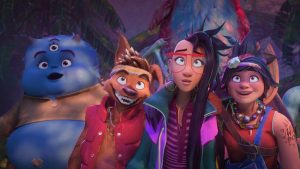
Forgotten Island isn’t without a few small quirks that may feel jarring to those of us in the audience who are a bit older. Like many DreamWorks films in the past, it sometimes delves into slapstick, potty humor, and characters spontaneously rapping for the heck of it. But hey, it’s still made for kids after all, so let that slide for the most part and laugh along with them when the fart jokes land. But that being said, it at times pushes its PG rating pretty far with some of those jokes and language it chooses to use.
Of course, the themes of memory, friendship, and growing up are the real meat of this film, and yes, it goes much deeper than it sounds. I went into the theater expecting a wacky DreamWorks adventure about two girls having an adventure in a fantasy world. But I wasn’t prepared for just how deep of a cut it would make for me, personally. About how growing up can mean realizing those you love can’t always remain at your side. By its climax, I was literally crying worse than some Pixar movies, not because it manipulated me to, but because the girls’ journey unexpectedly brought me face-to-face with the same feelings I was trying to escape as a kid by looking for portals to another world.
Sad to say, I’ve all but given up on finding my way into my own Nakali. But that’s why I love fictional stories so much. For a couple of hours, I can dive into a film like Forgotten Island and have an adventure along with the characters, maybe even realizing new things about myself even as a jaded adult. It’s truly wonderful to still see a new family film that can tell a deeply personal story rooted in one culture while finding emotions that audiences from very different backgrounds can recognize.